Leather Care
Italian Leather vs English Leather: Honest 2026 Comparison
Italian leather vs English leather: which is actually better? Honest comparison of grain, durability, smell, price, and the best UK brands for each.
When investing in a quality leather accessory, the origin of the leather matters enormously. Italian leather and English leather are both renowned worldwide, but they’re quite different in character, production methods, and how they age. Understanding these differences helps you choose the right leather for the right product and ensures your investment delivers decades of satisfaction.
A brief history of both traditions
Italian leather
Italy has been at the forefront of leather craftsmanship for over a thousand years. The tanneries of Tuscany, particularly around Florence and the town of Santa Croce, are legendary. Italian leather production is deeply intertwined with the fashion industry: the finished product tends to be luxurious, supple, and designed to look beautiful from day one.
The Italians perfected vegetable tanning using natural tannins from chestnut, oak, and mimosa bark. This method produces leather with exceptional depth of colour and the ability to develop a rich, warm patina over time.
English leather
England has its own leather heritage, centred historically around Northampton, Walsall, and the West Midlands. English leather production has traditionally served the equestrian, military, and saddlery trades; leather that prioritises strength, structure, and weather resistance.
English tanneries such as J & E Sedgwick and Thomas Ware have supplied leather for everything from cavalry saddles to luxury briefcases. The focus has always been on producing leather that performs under demanding conditions.
Tanning methods compared
Italian vegetable tanning
The traditional Italian method uses plant-based tannins — typically chestnut, oak, or mimosa bark. Hides are soaked in progressively stronger tannin solutions over several weeks or months. The result: leather with distinctive warmth, slight initial firmness that softens with use, and the ability to absorb oils and waxes that deepen colour over time.
Vegetable-tanned leather is also more environmentally friendly than chrome-tanned alternatives, avoiding chromium salts and industrial chemicals.
English oak bark tanning
The quintessential English method is oak bark tanning the slowest tanning process in the world. Hides are layered with ground oak bark in pits and left for up to 14 months. The result: extraordinary density and resilience, with a firm hand that gradually moulds to the user over years of wear.
Only a handful of tanneries worldwide still practise this method. The leather they produce commands a premium, but it’s genuinely in a class of its own for durability.
Modern chrome tanning
Both Italian and English tanneries also use chrome tanning for certain products. Faster (hours rather than weeks), softer leather, wider colour range. However, chrome-tanned leather doesn’t develop patina the same way and is generally considered less prestigious than vegetable or bark-tanned alternatives.
Characteristics side by side
| Italian leather | English leather | |
|---|---|---|
| Feel | Soft, supple, luxurious | Firm, structured, robust |
| Appearance | Rich colour, slight sheen | Natural, understated, matte |
| Patina speed | Develops quickly, warm tones | Develops slowly, deep tones |
| Durability | 15-25 years | 30+ years |
| Water resistance | Moderate | Good to excellent |
| Best for | Fashion items, wash bags, wallets | Briefcases, belts, saddlery |
| Price | Premium | Premium to very high |
Patina: how each ages
Patina is the gradual change in colour, texture, and sheen as leather absorbs hand oils, sunlight, and wear. One of the great pleasures of owning quality leather; your item becomes uniquely yours.
Italian leather patina
Italian vegetable-tanned leather develops patina relatively quickly. Within a few months of regular use, the colour deepens and warms; areas of frequent contact develop a subtle sheen. A tan Italian leather bag might shift towards rich honey or amber over its first year.
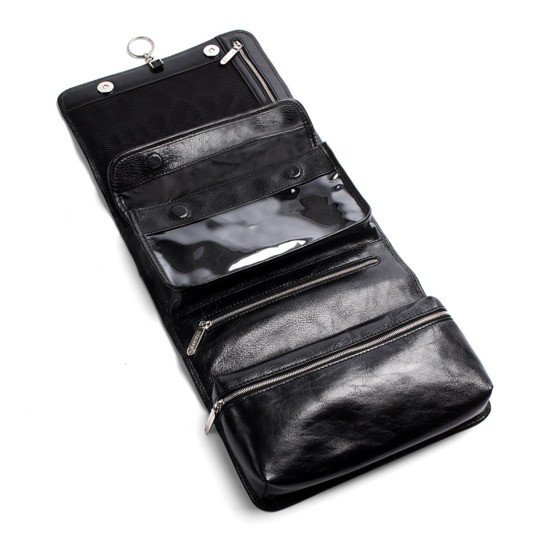
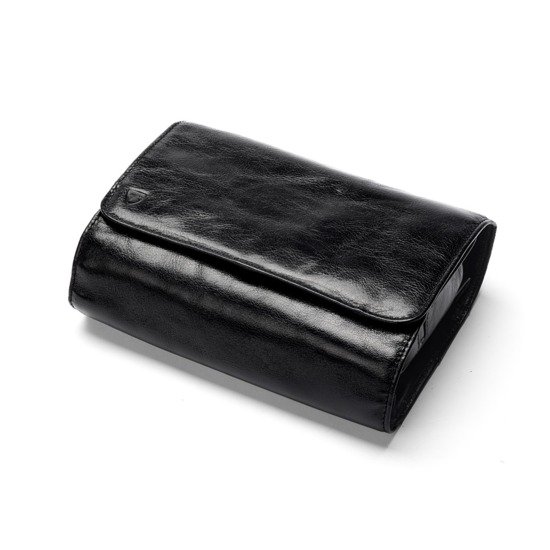
Our Italian Calf Hanging Toiletry Bag (£99.99) showcases this. The Italian calf starts with a refined, even tone and develops character with every trip.
English leather patina
English oak bark-tanned leather takes longer to develop patina, but the result is more dramatic. Starts firm and somewhat pale, gradually darkens to deep rich tones over years of use. An English bridle briefcase carried daily for five years has depth of character that simply cannot be replicated.
Which is best for which product
Toiletry bags and wash bags
Italian leather (or German calf) wins here. A wash bag benefits from suppleness — it needs to accommodate bottles and tubes of varying sizes, and softer leather moulds around contents naturally. Our Italian Calf Toiletry Bag (£99.99) and German Calf Premium Wash Bag (£129.99) are both well-suited to the application. Italian for refined finish, German for structural firmness.
Briefcases and laptop bags
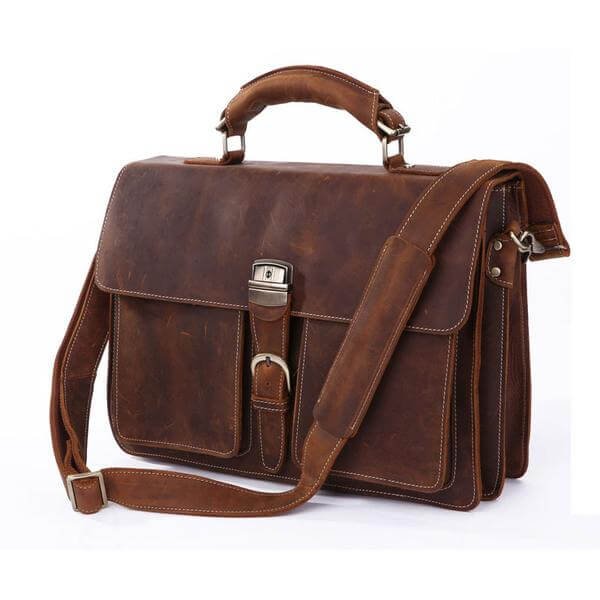
This is where English leather (or top-grain Italian) shines. A briefcase needs structure: must hold its shape, protect contents, withstand daily commuting. Firmness of English bridle or top-grain Italian provides this naturally without excessive internal stiffening. Our Vintage Leather Laptop Bag (£189.99) uses top-grain Italian for the right balance of structure and refinement.
Wallets and card holders
Italian leather is generally preferred for wallets. Suppleness makes it comfortable in a pocket, and quick-developing patina means your wallet gains character within weeks rather than months. See our leather passport holder for an example.
Belts
Both produce superb belts for different purposes. Italian leather belt: elegant, flexible, perfect for a suit. English bridle belt: stiffer, more robust, ideal for jeans or country wear.
Price considerations
Both Italian and English premium leather command similar prices at the raw material level. Italian leather products sometimes appear more expensive due to the fashion premium associated with Italian design houses; English leather products carry a premium for the extreme time investment in oak bark tanning.
Either way, you’re paying for leather that lasts decades. Cost per year of use makes both exceptional value compared to synthetic or lower-grade alternatives.
How to identify genuine Italian and English leather
Look for specific provenance information. Genuine Italian vegetable-tanned leather often carries the “Vera Pelle” mark or references to Tuscan tanneries (Walpier, Badalassi Carlo, Conceria Walpier). English oak bark-tanned leather is typically sold by name; if a product uses Sedgwick bridle, the maker says so because it’s a selling point.
Be wary of vague descriptions. Terms like “Italian-style leather” or “English-type leather” mean nothing. The real thing is identified by actual origin and tanning method.
Is Italian leather actually good?
Yes — but the word “Italian” alone guarantees nothing. Italy produces some of the world’s finest vegetable-tanned leather (Tuscan tanneries like Badalassi Carlo, Walpier, La Perla Azzurra) and also mass-produces chrome-tanned leather that’s no better than what comes out of Chinese factories.
The question isn’t “is Italian leather good” but “is this specific Italian leather good.” Look for:
- Named tannery or region (“Tuscan vegetable-tanned” is meaningful; “Italian leather” alone is not)
- Tanning method (vegetable-tanned or oak-bark-tanned = premium; chrome-tanned = standard)
- Grain type (full-grain > top-grain > corrected-grain > genuine > bonded)
A full-grain vegetable-tanned Italian calf from a named Tuscan tannery is genuinely world-class. “Italian leather” stamped on a fast-fashion wallet from a high-street chain is marketing, not quality.
What does “English leather” mean?
“English leather” refers to leather tanned in England using traditional methods, most notably oak bark tanning. It’s associated with the equestrian and military heritage of English leather production — saddles, bridles, Sam Browne belts, officers’ cases.
The term carries specific connotations: firmness, density, extreme durability, and slow-developing patina. English leather is not a legally protected term, but the tanneries that produce genuine English leather (Sedgwick, Thomas Ware, Baker’s of Colyton) are well-known enough that the provenance is verifiable.
In perfumery, “English Leather” is also a cologne brand — entirely unrelated to actual leather production.
German leather: the overlooked third option
Germany produces excellent calf leather that sits between Italian softness and English firmness. German calf is particularly prized for structured accessories — wash bags, dopp kits, camera bags — where you want leather that holds its shape when packed but isn’t as rigid as English bridle.
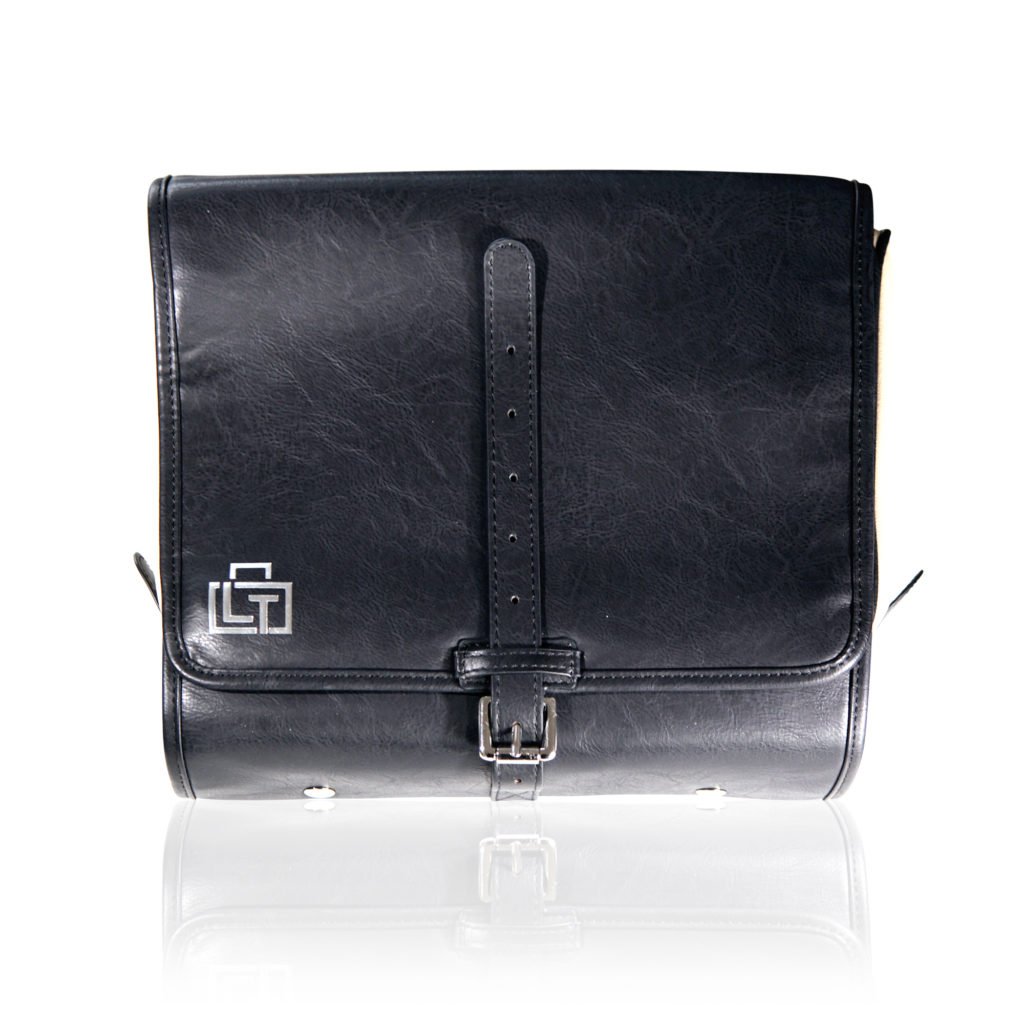
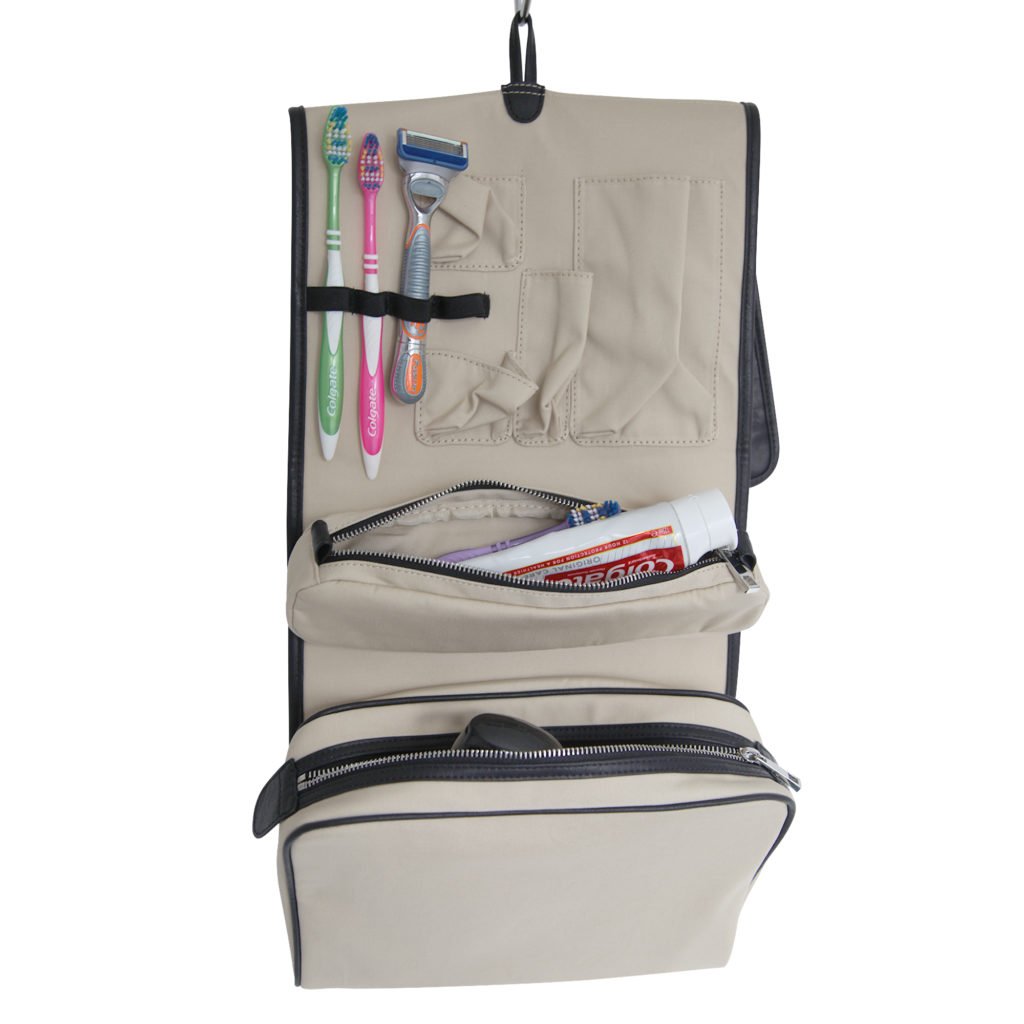
Our Premium Mens Hanging Leather Wash Bag (£129.99) uses full-grain German calf for exactly this reason: firm enough to stand upright when open, supple enough to fold flat when packed.
German leather doesn’t carry the same brand cachet as Italian or English, which keeps prices lower at equivalent quality. For functional leather goods (rather than fashion items), German calf is often the smartest buy.
Final thoughts
There’s no outright winner. Italian leather offers immediate luxury, quick patina, sublime softness. English leather provides unmatched structure, extraordinary durability, slow-burning beauty over years.
Best choice depends on the product. For soft accessories and fashion items, Italian is hard to beat. For structured bags, belts, and items that endure serious daily use, English is the gold standard.
Explore our luxury leather travel accessories to discover pieces in both traditions.
Related reading
Questions answered
Is Italian leather softer than English leather? +
Yes. Italian vegetable-tanned leather is generally softer and more supple than English oak-bark-tanned leather. Italian leather is designed for fashion items where drape matters; English leather is firmer for structural items like saddles, briefcases, and belts. Both are premium; the difference is character not quality.
Which lasts longer. Italian or English leather? +
English oak-bark tanned leather typically lasts longer in absolute terms (often 30+ years with care) due to extreme density from the 14-month tanning process. Italian vegetable-tanned leather lasts 15-25 years comfortably. Both far outlast chrome-tanned alternatives. For daily-use items expected to last a generation, English wins; for fashion items where you want patina within months, Italian wins.
What's the difference between vegetable tanning and chrome tanning? +
Vegetable tanning uses plant-based tannins (chestnut, oak bark, mimosa) over weeks or months. Produces firmer leather that develops rich patina. Chrome tanning uses chromium salts, takes hours, produces softer leather with broader colour range but less character. Premium Italian and English leathers are usually vegetable-tanned; mass-market leather is usually chrome-tanned.
Where can I buy real Italian leather goods in the UK? +
Look for products that name the Italian tannery (e.g., 'Tuscan vegetable-tanned' or specific tannery names like Walpier, Conceria Walpier, Badalassi Carlo, La Perla Azzurra). Avoid vague descriptions like 'Italian-style leather' which usually means chrome-tanned in another country. Premium leather goods makers including LuxuryTrex's Italian calf wash bag, name their leather sources.
Why does Italian leather smell different? +
Real vegetable-tanned Italian leather has a characteristic warm, woody, slightly sweet smell from the natural tannins. Chrome-tanned leather smells more chemical/plastic. English oak-bark leather has a deeper, smokier scent from the long tanning process. The smell test is one of the most reliable ways to distinguish quality leather from cheap alternatives.
Which leather is better for a wash bag — Italian or English? +
Italian calf is the more common premium choice for wash bags: it's softer (moulds around bottles), has a refined finish (looks dressy), and patinas quickly. English bridle leather wash bags exist but are rarer and usually heavier. Italian wins for everyday wash bag use; English would be overkill for the application.
What is bridle leather? +
Bridle leather is heavily oil-and-wax conditioned vegetable-tanned leather originally developed for horse tack (bridles, saddles). It's particularly water-resistant and ages to a deep, glossy patina. English bridle leather (from Sedgwick, Thomas Ware) is the gold standard. Used in premium briefcases, belts, and structural leather goods.