Wallets & RFID
Best RFID Blocking Wallets & Cards UK 2026 — Metal vs Leather Tested
Best RFID blocking wallets for men UK 2026. Metal vs leather compared, tested at 13.56 MHz for real contactless skimming protection. Buying guide + top picks.
Contactless payment has transformed how we pay and created a new vulnerability. RFID skimming, where criminals use concealed scanners to read your card data wirelessly, is a real and growing threat in 2026. An RFID blocking wallet or card holder is the simplest, most effective defence.
This guide explains how the technology works, what to look for, and which products offer the best protection in the UK market.
How RFID skimming works
Every UK contactless bank card, credit card, and modern biometric passport contains a tiny RFID (Radio Frequency Identification) chip. This chip communicates wirelessly with payment terminals when you tap to pay: the same technology that makes contactless payments possible.
The problem: this communication isn’t limited to legitimate payment terminals. A criminal with a portable RFID reader (£20-50 on the open market) can activate your card from a few centimetres away, capturing your card number and expiry date. They can’t get your PIN or CVV, but the stolen data can be used for online purchases at retailers with weak security checks.
This typically happens in crowded spaces; the London Underground, busy high streets, festivals, and airports. You wouldn’t know it happened until a suspicious transaction appears on your statement.
How RFID blocking works
RFID blocking uses a simple principle: a conductive material creates a Faraday cage around your cards, preventing radio waves from reaching the chip. Your card cannot communicate with any reader — legitimate or otherwise until you physically remove it from the wallet.
The blocking material is usually a thin layer of aluminium, copper, or specialist metallic fabric woven into the wallet lining. The protection is passive: no batteries, no electronics, no app. The shell just is the shield.
Quality RFID blocking products are tested at 13.56 MHz (the ISO/IEC 14443 standard, used by UK bank cards and biometric passports) and 125 kHz (used by some access cards).
What to look for
Verified blocking performance
Not all products claiming RFID protection deliver it. Look for wallets that specify the frequencies they block and reference independent testing. Avoid vague claims without supporting detail.
Material quality
RFID blocking is only as good as the wallet that houses it. A poorly made wallet wears out, and if the blocking layer is damaged your protection disappears. Metal cases (where the case IS the shield) avoid this failure mode entirely.
Capacity vs slimness
The eternal wallet trade-off. Most adults only need 4-6 cards in active rotation. Choose accordingly: over-stuffing a slim wallet defeats the slim part.
Accessibility
Some RFID wallets make accessing a single card slow. The best designs include a quick-access slot or pop-up mechanism that fans cards for easy selection.
Metal vs leather RFID wallets
Metal card wallets; the minimalist choice
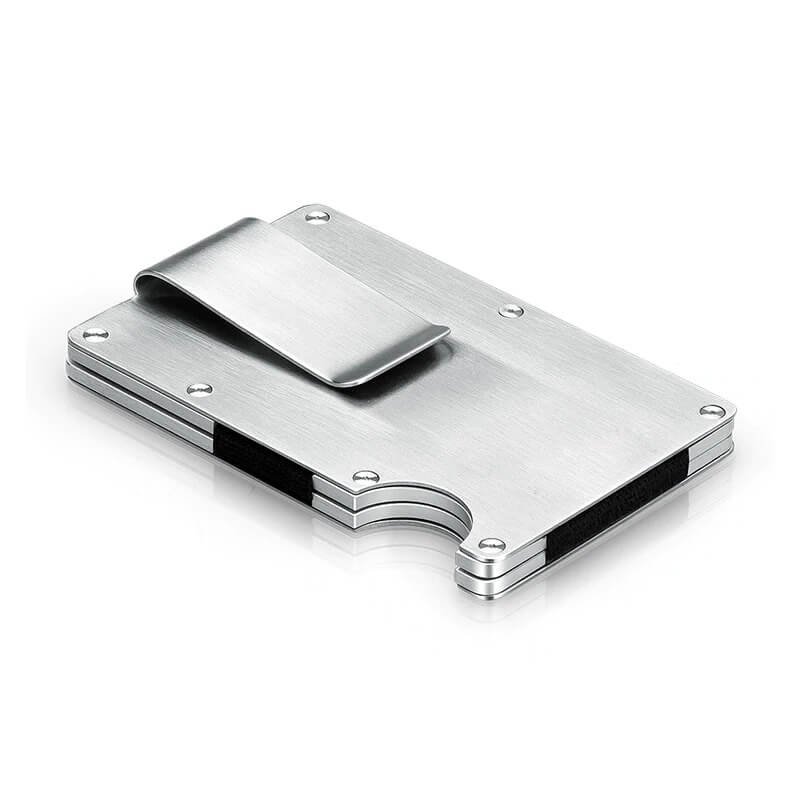
Metal wallets (typically aluminium) provide inherent RFID blocking — the metal casing itself IS the Faraday cage. They are slim, virtually indestructible, and often feature a spring-loaded mechanism that fans cards with a click.
Our Slim Metal RFID Blocking Card Wallet (£34.99) is built from aerospace-grade aluminium with a one-handed pop-up mechanism. Holds 8 cards comfortably (up to 12 max), 70g half the weight of a typical leather bifold. Independently tested at 13.56 MHz against UK contactless skimming.
Best for: Front-pocket carriers, daily commuters using contactless multiple times daily, minimalists upgrading from a bulky leather bifold.
Trade-off: No traditional cash compartment (just an elastic strap on the back for 3-4 banknotes). No coin compartment. Limited to 8-12 cards.
Leather RFID wallets: the classic upgrade
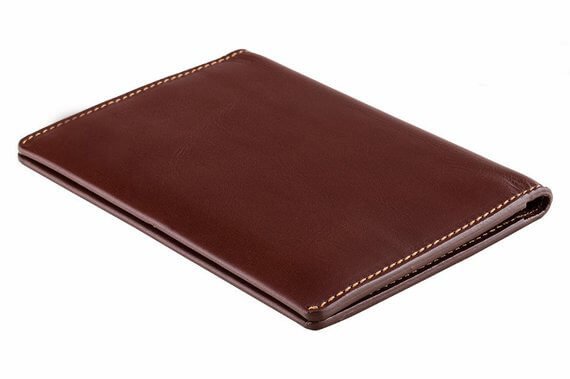
Leather RFID wallets look and feel like traditional wallets but incorporate a blocking layer in the lining. More capacity (notes pocket, multiple card slots, sometimes coin compartment) while still providing protection.
Our Leather Passport Holder & Document Wallet (£49.99) is full-grain Italian leather with a metallised nylon RFID-blocking lining. Holds passport + 4 cards + boarding passes + hidden SIM pocket + pen loop. Particularly useful for international travel where you want passport + travel cards consolidated.
Best for: International travellers, anyone wanting a more traditional wallet aesthetic, gift purchases (leather looks like a gift; aluminium looks like a gadget).
Slim vs traditional; which style suits you
The case for slim
If you carry your wallet in a front trouser pocket — security experts recommend this, as it’s harder for pickpockets to access slim is essential. A bulky wallet in a front pocket is uncomfortable and conspicuous.
Slim wallets force you to carry only what you need: primary bank card, credit card, driving licence, perhaps one loyalty card. The enforced minimalism is liberating once you adjust.
The case for traditional
If you still use cash regularly, need to carry receipts, or prefer the feel of a classic bifold, there’s no shame in a traditional wallet. Many traditional-style leather wallets now include RFID blocking without bulk increase.
Choose traditional if you travel frequently to countries where cash is still king, or if your work requires you to keep receipts for expenses.
Common RFID myths debunked
Myth: tin foil works just as well
Technically, aluminium foil blocks RFID. Practically, it tears, crinkles, and looks absurd at the till. A proper RFID wallet costs less than a round of drinks and lasts years.
Myth: stacking cards together blocks RFID
Multiple cards in close proximity sometimes interfere with each other, but unreliably and inconsistently. Not a security strategy.
Myth: RFID skimming isn’t real
Action Fraud and the Metropolitan Police continue to record cases of contactless fraud. The technology to skim cards is readily available and inexpensive. Prevention beats dealing with the aftermath.
Best RFID blocking card 2026: do you even need a wallet?
If you only carry one or two contactless cards, a standalone RFID blocking card might be enough. These sit in your existing wallet and shield adjacent cards without changing your setup.
An RFID blocking card is a credit-card-sized sheet of metallic material that disrupts 13.56 MHz signals within a few centimetres. Slide it next to your contactless card and it jams the frequency.
When a blocking card makes sense:
- You already have a wallet you like and don’t want to replace it
- You carry 1-2 contactless cards at most
- You want the cheapest possible RFID protection (most blocking cards cost £3-8)
When a blocking card falls short:
- Multiple contactless cards in the same wallet — a single card can’t shield both sides
- Passport protection — blocking cards don’t cover the passport chip
- Long-term reliability — cheap blocking cards degrade after 12-18 months of daily flexing
For comprehensive protection across all cards plus a passport, a dedicated RFID wallet remains the stronger choice. But a blocking card is a sensible £5 starter if you’re not ready to switch wallets.
Our top picks for 2026
| Product | Price | Best for |
|---|---|---|
| Slim Metal RFID Card Wallet | £34.99 | Front-pocket minimalists, daily commuters |
| Leather Passport Holder + RFID | £49.99 | International travellers, gift purchases |
Final thoughts
RFID blocking is no longer a nice-to-have: it’s a sensible precaution for anyone carrying contactless cards. Whether you prefer the minimalist efficiency of a metal card case or the classic feel of leather, there’s an RFID-blocking option that fits.
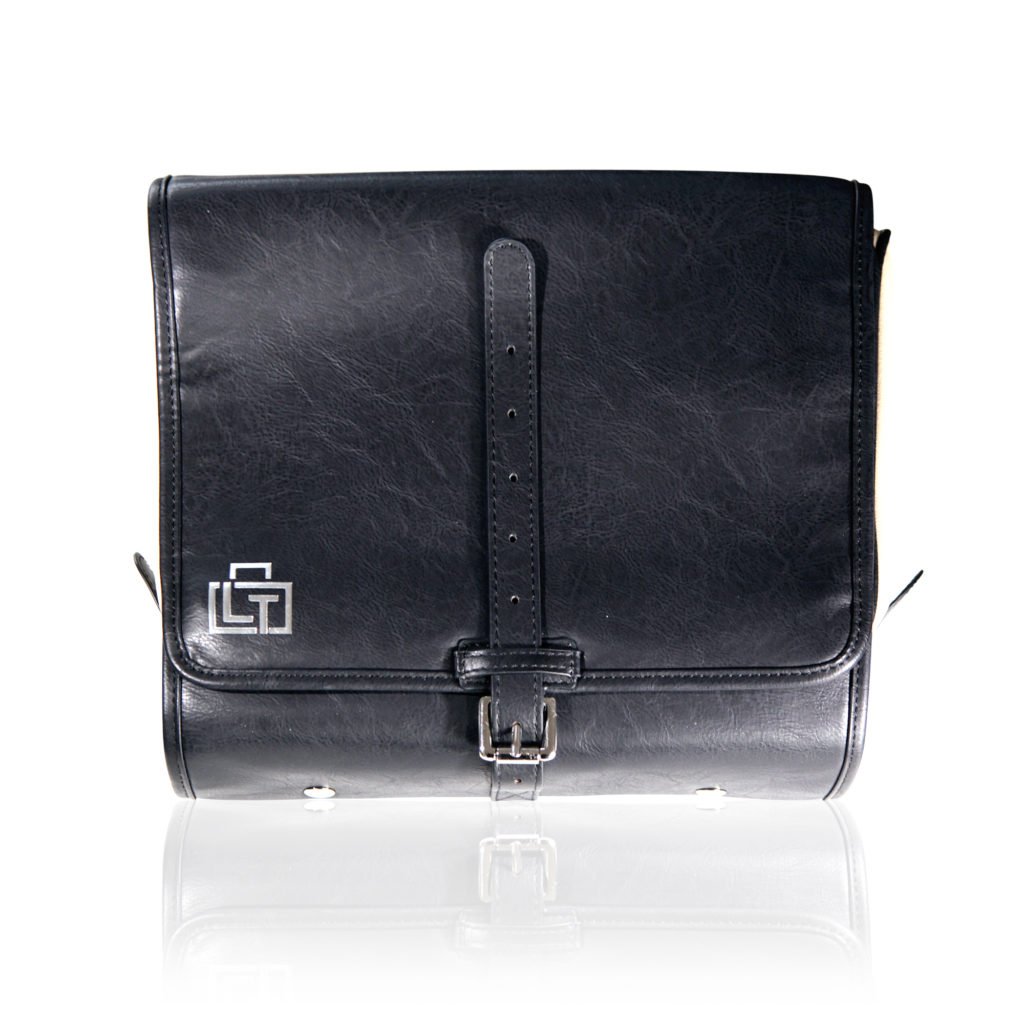
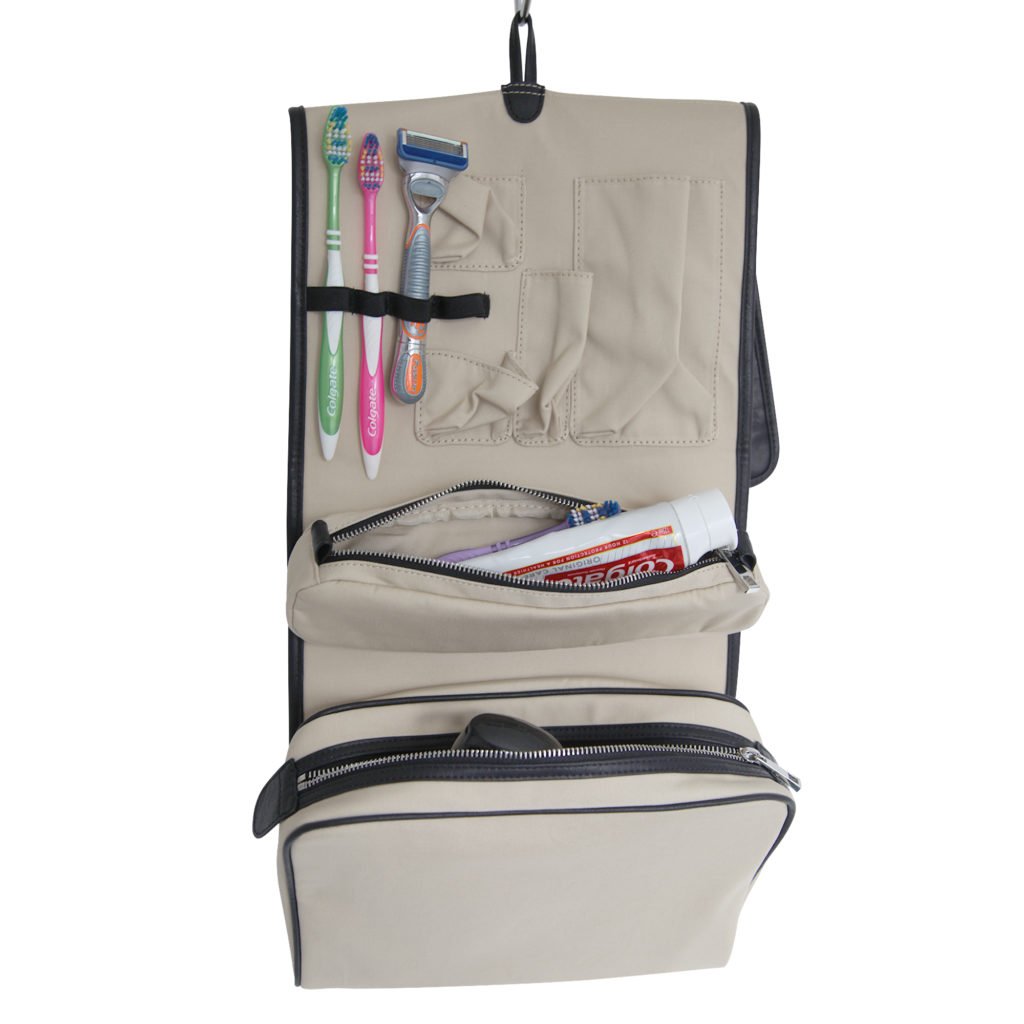
Pair your wallet with a quality leather wash bag and laptop bag for a complete travel kit; see our luxury leather travel accessories guide for the full setup.
Related reading
Questions answered
Does RFID blocking actually work? +
Yes; but only if implemented correctly. A sealed metal wallet creates a Faraday cage that blocks 13.56 MHz radio frequencies (the ISO/IEC 14443 standard for UK contactless cards). We've tested with UK debit, credit, Oyster, hotel keycards, and office passes: none read while inside the wallet. Card sleeves and aluminium foil work in theory but fail in practice (sleeves slide out, foil tears).
Is RFID skimming a real threat in the UK? +
Action Fraud and the Metropolitan Police continue to record cases. The technology is cheap and readily available; criminals can read card details from up to 10cm in crowded places (Tube, festivals, airports). They can't get your PIN, but they can use card number + expiry for online purchases at retailers with weak security checks.
Metal wallet vs leather wallet which is better for RFID? +
Metal wallets have built-in RFID protection (the shell IS the Faraday cage) and are slimmer. Leather wallets need a metallised lining added; quality varies. For pure protection + slim profile, metal wins. For aesthetic, capacity, and developing patina, leather wins. Both work if well-made.
How many cards should I carry? +
Most adults need 4-6 cards: debit, credit, driving licence, Oyster/transport, plus 1-2 loyalty cards. If you're carrying 10+ cards, you're keeping cards 'just in case' that you haven't used in 6 months, cull the wallet, free up space.
Will an RFID wallet set off airport metal detectors? +
A metal RFID wallet will, like keys or a watch — you'll need to put it in the tray at security. Not flagged as suspicious. Leather RFID wallets with thin metallised lining typically don't trigger detectors.
How is RFID blocking different from contactless card limits? +
Contactless transaction limits (£100 in UK) protect against in-person abuse if your card is stolen. RFID blocking protects against unauthorised reads while the card is still in your possession. They solve different parts of the same problem; you want both.
Should I get an RFID passport holder too? +
Yes if you travel internationally. Modern UK biometric passports contain an RFID chip with your name, photo, and biometric data: readable from up to 10cm. Skimming passport data is rarer than card skimming but does occur in busy transport hubs. An RFID-blocking passport holder is a reasonable passive defence.