Home Decor
Best Stylish Mirrors UK 2026 — Statement Pieces That Transform a Room
Best stylish mirrors for UK homes in 2026. Asymmetric, frameless, and modern designs that make small rooms feel bigger. Buying guide with sizing, placement tips, and our top pick.
A well-chosen mirror does more for a room than a repaint. It multiplies natural light, creates the illusion of depth, and gives a wall a focal point that isn’t another framed print. The difference between a forgettable mirror and a stylish one is shape, proportion, and how it sits on the wall.
What to look for in a stylish mirror
Shape that disrupts the rectangle
Most rooms are rectangular. Most furniture is rectangular. A rectangular mirror just adds another rectangle. The rooms that feel designed rather than furnished break this pattern — and an asymmetric, arched, or organic-edge mirror is the simplest way to do it.
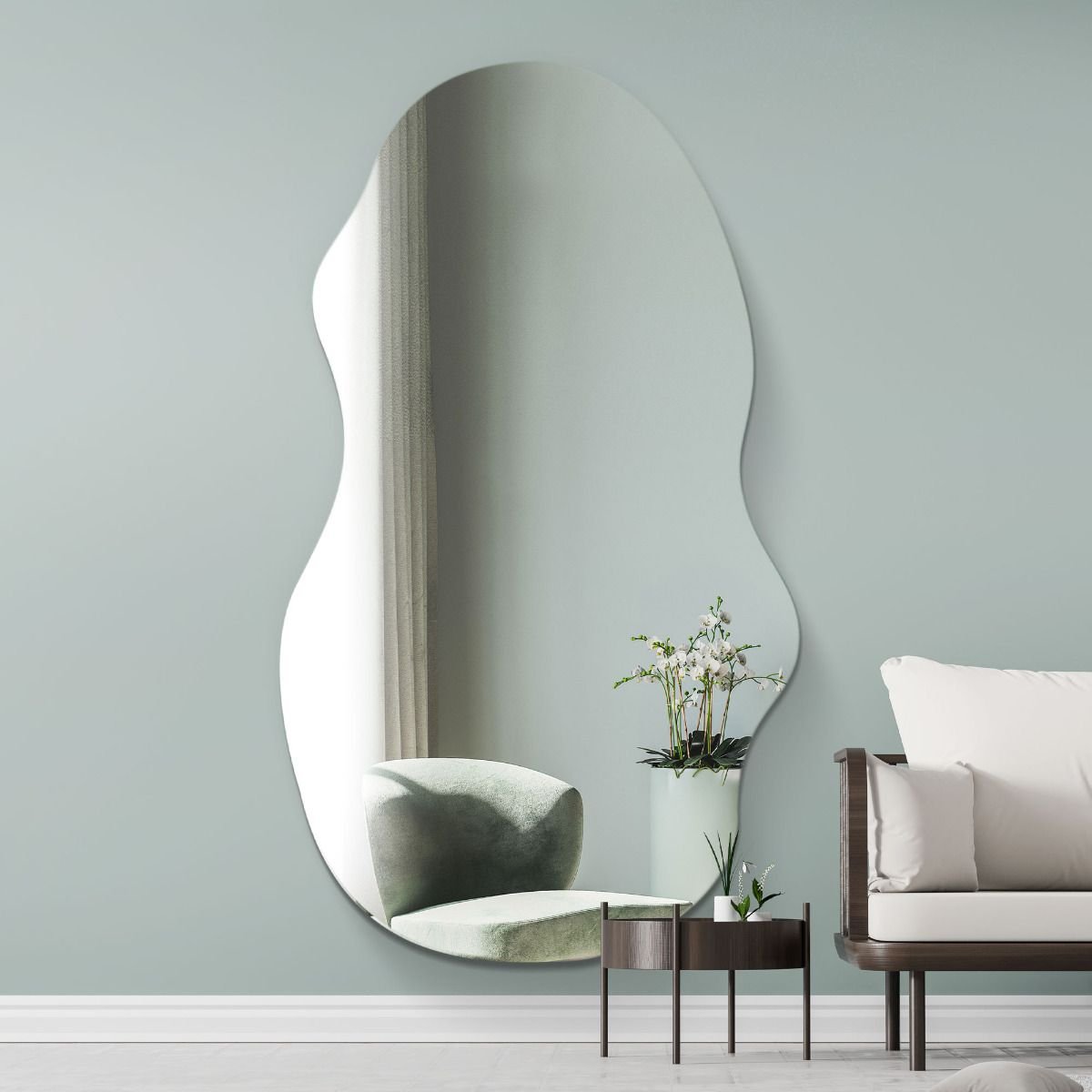
Asymmetric mirrors with hand-cut organic edges are particularly effective in narrow spaces (hallways, entryways, between doors) because the irregular shape stops the eye from registering the wall as a flat plane.
Frameless float-mount
A frameless mirror with concealed wall-mount hardware creates a “floating” effect — glass appears to hover on the wall with no visible brackets or border. This reads cleaner and more contemporary than any framed alternative.
The mounting gap (typically 1-2cm between glass and wall) also catches and reflects ambient light from the sides, adding a subtle glow around the edges.
Safety-backed glass
Any large wall mirror should be safety-backed: a laminated layer behind the silvered glass that holds fragments in place if the mirror is ever damaged. Non-safety-backed mirrors over 60cm are a liability, especially in hallways where coats and bags swing past daily.
Size that fits the wall
The most common mistake: buying a mirror too small for the wall. A 30cm mirror on a 200cm wall looks like an afterthought. Rules of thumb:
- Mirror width should be 50-75% of the wall width (or the piece of furniture below it)
- Statement mirrors work best at 90-110cm tall — large enough to be intentional, not so large they dominate
- Leave at least 10cm clearance on each side so the mirror “breathes”
Where to place a stylish mirror
Narrow hallways
The highest-impact placement. A large mirror in a hallway bounces light from the front door deeper into the home and makes the corridor feel twice as wide. Hang at eye level (centre of mirror at 150-160cm from floor).
Opposite a window
Multiplies natural light in north-facing or dim rooms. The mirror acts as a second window, reflecting daylight across the room. Particularly effective in living rooms and kitchens.
Above a console table
Creates a focal point in an entryway or dining room. The console anchors the mirror visually, and the combination replaces the need for artwork above.
Living room dead wall
Every living room has one wall that gets nothing — too far from the sofa for art, too narrow for shelving. A statement mirror transforms dead space into a design feature.
Bedroom feature wall
Beside (not above) the bed. A large asymmetric mirror on a side wall gives the room depth and provides a full-length checking angle without the cliche of a floor-standing mirror.
Our top pick: Large Asymmetric Wall Mirror — £199.99
Our Large Asymmetric Wall Mirror is a 100×70cm frameless statement piece with hand-cut organic edges and concealed float-mount hardware. 5mm safety-backed silvered glass on a hardwood backing.
Why we like it:
- Asymmetric edge breaks rectangular room geometry
- Concealed brackets create a clean floating finish
- Safety-backed glass rated for hallway use
- Pre-fitted hardware, 30-minute install
- Each mirror has a slightly different bevel fingerprint from hand-polishing
Best for: Hallways, living rooms, entryways, and any room that needs natural light amplified without adding a window.
Not ideal for: Bathrooms (hardwood backing isn’t humidity-rated) or directly above fireplaces (heat affects silvering).
Stylish mirror styles for 2026
Asymmetric / organic
Irregular edges, no two identical. The strongest trend in 2026 interior design — seen in Architectural Digest, Elle Decoration, and across high-end hotel lobbies. Works in both minimal and maximalist rooms because the shape carries the design weight.
Arched
The soft arch at the top softens angular rooms without going fully irregular. Good compromise if asymmetric feels too bold. Works particularly well in period properties where the arch echoes doorway and window shapes.
Geometric frameless
Clean geometric shapes (hexagonal, capsule, pebble) without frames. More structured than asymmetric, more interesting than rectangular. Suits mid-century modern and Scandi interiors.
Tinted glass
Mirrors with a subtle bronze, smoke, or blush tint. The reflection is slightly warmed or cooled, which changes the room’s colour temperature. A bronze-tinted mirror in a white room adds warmth without paint.
Care and maintenance
- Clean with 50/50 water and white vinegar on a microfibre cloth
- Spray the cloth, not the mirror — moisture wicking under the glass tarnishes silvering
- Avoid ammonia-based glass cleaners on bevelled edges
- Check wall anchors annually in plasterboard walls (large mirrors are heavy)
Related reading
Questions answered
What makes a mirror 'stylish' rather than just functional? +
Shape, edge treatment, and how it interacts with the room. A rectangular mirror with a standard frame is functional. A mirror with an organic asymmetric edge, a frameless float-mount, or an unusual proportion becomes a design element that changes how the room feels — not just how you look in it.
Are asymmetric mirrors a trend or a lasting style? +
Asymmetric and organic shapes have been a staple of high-end interior design since the mid-century modern movement (1950s-60s). They resurge in popularity every decade because they solve a real design problem: breaking up the rectangular monotony of most room architecture. Not a passing trend.
What size mirror do I need for my hallway? +
For a standard UK hallway (80-100cm wide), a mirror 60-80cm wide works best — large enough to reflect meaningful light without overwhelming the wall. Height depends on whether you want full-length (150cm+) or statement-piece (90-110cm). Our 100×70cm asymmetric mirror is sized for the most common UK hallway dimensions.
Frameless vs framed mirror — which looks more modern? +
Frameless reads more modern and minimal. The glass floats on the wall without a visible border, which suits contemporary interiors. Framed mirrors suit period properties, maximalist decor, or rooms that need the visual weight of a border. For 2026 interiors, frameless is the dominant trend.
Can a mirror really make a small room feel bigger? +
Yes — this is one of the oldest interior design techniques. A mirror reflects light and creates the illusion of depth beyond the wall. Positioning a mirror opposite or adjacent to a window multiplies the natural light in the room. Asymmetric mirrors amplify this effect because the irregular edge prevents the brain from reading the reflection as 'flat wall with glass on it.'