Wallets & RFID
Best Metal Wallets UK 2026 — Aluminium Card Holders That Replace Leather
Best metal wallets UK 2026. Aluminium and steel card wallets compared: RFID blocking, pop-up mechanisms, capacity, and why metal beats leather for front-pocket carry.
The leather bifold has had a 200-year run. For front-pocket carriers who pay contactless and carry 6-8 cards, a metal wallet does everything better: slimmer, lighter, faster access, and RFID blocking built into the shell rather than bolted on.
This guide covers what makes a good metal wallet, who should switch, and who shouldn’t.
Why metal wallets are replacing leather
The shift isn’t about fashion. It’s about how we actually use wallets in 2026:
- Contactless is the default. 85% of UK in-store transactions are now contactless. You need fast card access, not a notes compartment.
- Front-pocket carry is safer. Pickpocketing targets back pockets. Security experts recommend front-pocket carry — but a stuffed leather bifold doesn’t fit comfortably in a front pocket. A 1.2cm metal wallet does.
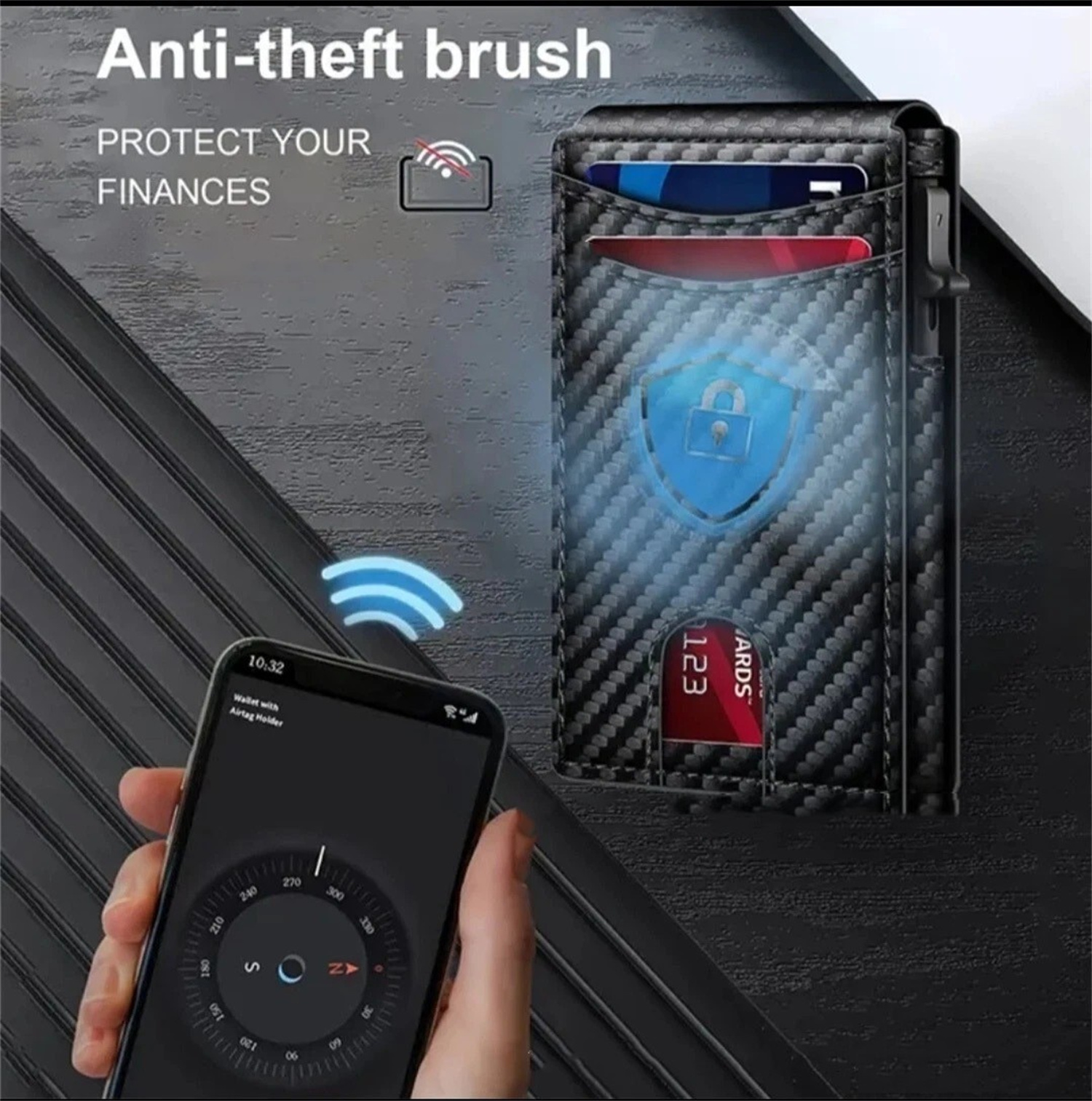
- RFID skimming is real. A metal wallet is a Faraday cage by construction. No lining to degrade, no sleeve to misplace — the shell IS the shield.
- Fewer cards, faster access. A pop-up mechanism fans 8 cards in a clean arc. No digging through slots, no opening a flap, no squinting at card edges.
What to look for in a metal wallet
Material: aluminium vs steel vs titanium
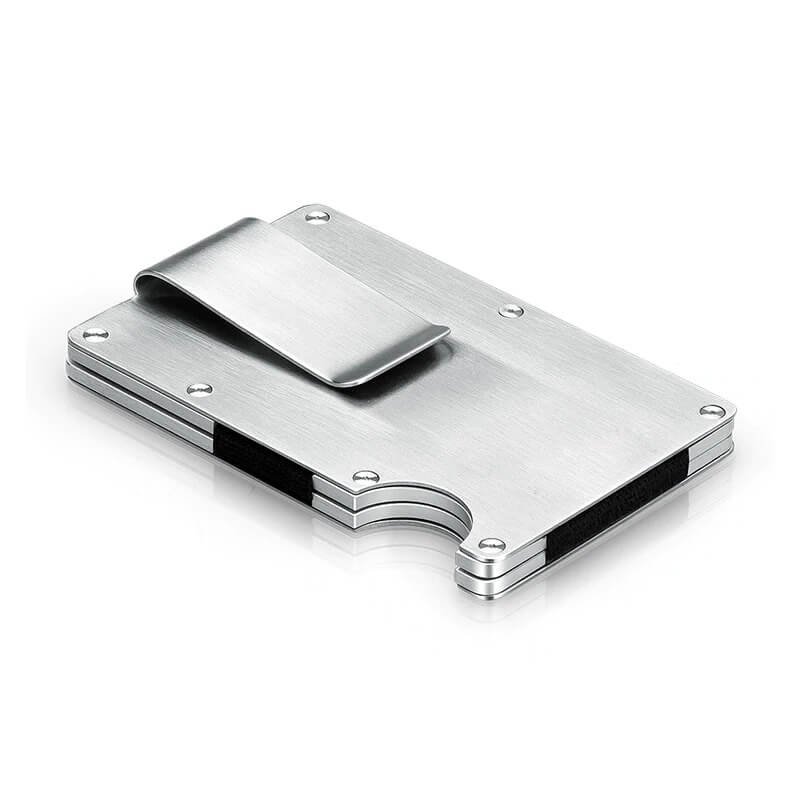
Aluminium (most common): lightweight (60-80g), naturally RFID-blocking, easy to anodise in colours, affordable. The standard choice. Scratches more visibly than steel but lighter by 40-50%.
Stainless steel: heavier (120-160g), more scratch-resistant, premium feel. Doesn’t inherently block RFID — needs a separate blocking layer unless fully enclosed. Better for those who prioritise durability over weight.
Titanium: lightest and strongest but 3-4× the price. Overkill for a wallet unless you’re specifically buying a luxury EDC piece.
For most people, aluminium is the right call. Light enough to forget it’s there, tough enough to last years, and RFID blocking is free.
Card mechanism
Pop-up / fan-out (recommended): press a lever and cards fan in an arc, each offset for easy selection. Fastest access, most satisfying to use. Our preference.
Slide-out: cards push out from a side slot in a stack. Simpler mechanism, fewer moving parts, but harder to select a specific card from the middle.
Pull-tab: a fabric tab pulls cards up from the top. Works well with 4-5 cards but jams above 8.
Capacity
The sweet spot is 6-8 cards. Below 6 and you’re leaving essential cards at home. Above 10 and the wallet thickens enough to lose the slim advantage.
Typical 8-card loadout: debit card, credit card, Oyster/transport, driving licence, work/gym pass, 2-3 loyalty cards.
Cash solution
Most metal wallets add a rear elastic strap or clip for folded banknotes. Holds 3-5 notes comfortably. In the UK where contactless covers almost everything, this is enough. If you regularly carry £50+ in mixed denominations or need coins, a metal wallet isn’t the right format.
Who should switch to a metal wallet
- Front-pocket carriers: the slim profile genuinely disappears in a front trouser or jacket pocket
- Daily commuters: fast contactless card access, RFID-protected on crowded transport
- Minimalists: forces you to carry only what you actually use
- Anyone worried about RFID skimming: the protection is structural, not added
- Men replacing a bulging leather bifold: the most common switch
Who should keep leather
- Cash-heavy users: metal wallets don’t do notes well and don’t do coins at all
- Back-pocket carriers: metal on a chair seat is uncomfortable
- Receipt keepers: no fold or compartment for paper slips
- Patina lovers: leather develops character; aluminium just develops scratches
Our pick: Slim Metal RFID Blocking Card Wallet — £34.99
Our Slim Metal RFID Blocking Card Wallet is aerospace-grade aluminium with a one-handed pop-up mechanism. 70g, 1.2cm thin, holds 8 cards comfortably (12 max). Elastic cash strap on the back. Independently tested at 13.56 MHz against UK contactless skimming.
What sets it apart:
- Aerospace aluminium, not generic cast aluminium — lighter and stronger
- Pop-up fans cards in a clean arc; each card offset for easy one-handed selection
- 70g total — less than half the weight of a leather bifold
- Anodised finish (colour is in the metal, doesn’t peel or chip)
- 12-month warranty on mechanism and shell
The trade-off: No coin pocket, limited to 3-4 folded banknotes on the strap, and yes — it goes in the tray at airport security. For a contactless-first lifestyle, these aren’t drawbacks.
Metal wallet vs leather wallet: side by side
| Metal wallet | Leather bifold | |
|---|---|---|
| Weight | 60-80g | 120-180g |
| Thickness | 1.0-1.5cm | 2.0-3.0cm |
| RFID protection | Built-in (shell IS the shield) | Added lining (quality varies) |
| Card access | Pop-up fan, 1-2 seconds | Open, find slot, slide out |
| Cash | Elastic strap, 3-5 notes | Full notes pocket + coin compartment |
| Front pocket | Comfortable | Uncomfortable when full |
| Patina | No (scratches) | Yes (improves with age) |
| Durability | 5-10 years (mechanism wear) | 5-15 years (stitching wear) |
Related reading
Questions answered
Are metal wallets better than leather wallets? +
For front-pocket carry, yes — metal wallets are slimmer (1.2cm vs 2.5cm), lighter (70g vs 150g), and have built-in RFID protection. For cash-heavy users, back-pocket carriers, or anyone who values leather patina, a traditional wallet still wins. Metal is a functional upgrade; leather is an aesthetic choice.
Do metal wallets scratch your cards? +
Quality metal wallets have smooth-finished interiors and spring-loaded card rails that push rather than scrape. Cheap ones with rough aluminium edges will scratch cards. The interior finish matters more than the material — check product reviews for this specifically.
How many cards can a metal wallet hold? +
Most hold 6-12 cards depending on design. The optimal load for a pop-up mechanism is 6-8 cards — enough for debit, credit, driving licence, Oyster, and a couple of loyalty cards. Above 10 cards, the fan-out mechanism slows and the wallet thickens noticeably.
Will a metal wallet set off airport security? +
Yes — put it in the tray with your keys and phone. Not flagged as suspicious; treated like any personal metal item. This is the one genuine inconvenience of metal wallets versus leather.
Is aluminium or stainless steel better for a wallet? +
Aluminium is lighter (70g vs 120g+) and provides RFID blocking. Stainless steel is more scratch-resistant but heavier and doesn't inherently block RFID (needs a separate blocking layer). For daily front-pocket carry, aluminium wins on weight and built-in protection.
Do metal wallets block contactless payment when you want to use it? +
Yes — that's the point. While the wallet is closed, no reader can access your cards. To pay, you pop the card out (takes 1-2 seconds), tap, and return it. The slight extra step is the trade-off for RFID security.
What about cash? +
Most metal wallets use an elastic strap on the back for 3-5 folded banknotes. Works fine for the UK where contactless covers most transactions. If you regularly carry £50+ in cash or need coins, a metal wallet isn't for you.